

Call Us Now
Call Us Now

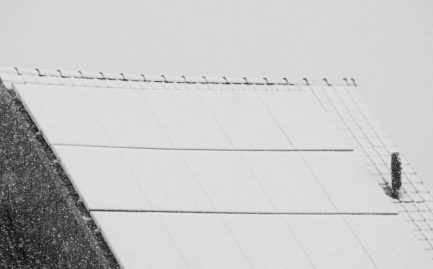
Yes — solar panels work in winter and on cloudy days in Texas. Panels run on light, not heat, so they keep producing year-round: expect roughly 60–70% of summer output on a typical winter day and anywhere from 30–75% of normal output under clouds, depending on how thick they are. With 200+ sunny days a year across most of the state, Texas winters barely dent a well-designed system’s annual production.
It’s the question every Texas homeowner asks in their first solar conversation: what happens when the weather turns? The short answer is “less power, not no power” — and the longer answer contains a few surprises, including the fact that panels actually run more efficiently in cold weather.
Here’s exactly what to expect from your panels in every season Texas throws at them.
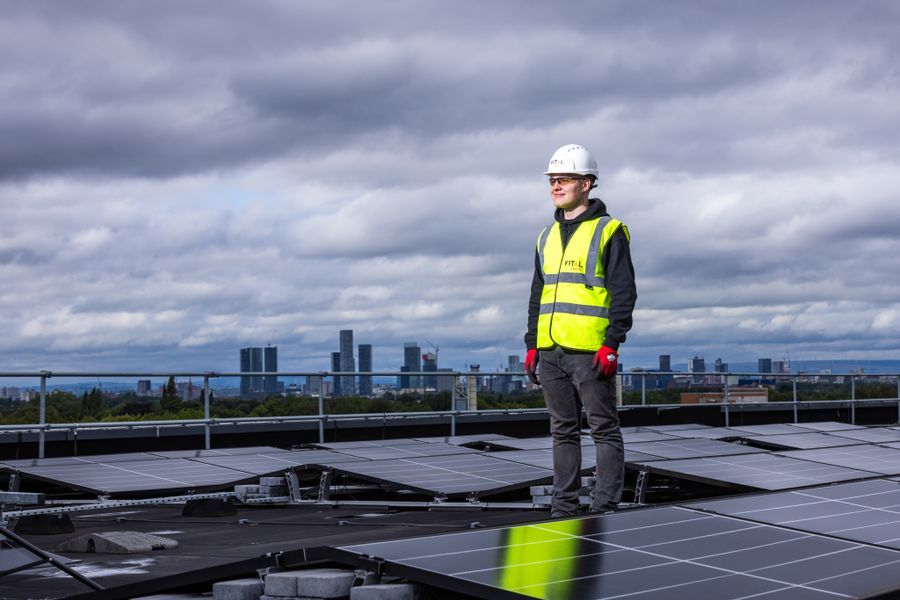 Winter changes two things: days get shorter, and the sun sits lower in the sky. Together they trim daily production to roughly 60–70% of summer levels in most of Texas — a far gentler winter penalty than northern states see, because Texas winter days stay relatively long and frequently clear.
Here’s the counterintuitive part: cold improves the physics. Solar cells lose efficiency as they heat up, which is why a mild, sunny 50-degree January afternoon can out-produce a brutal 105-degree August one, hour for hour. Cold never hurts the panels themselves — they’re tested far below any temperature Texas can produce.
And the rare Texas snow? Light snow slides off tilted panels quickly, and the bright reflection off snow-covered ground can briefly boost output once the glass is clear.
Clouds don’t switch panels off — they dim them. Panels convert diffuse light as well as direct sun, so production continues at reduced strength:
The key is that Texas strings together far more sunny days than gray ones — most of the state sees 200+ per year. A well-sized system is designed against your annual usage, so a cloudy stretch in January was already priced into the math.
 Dust and pollen build up on panels through dry Texas stretches and quietly shave production. A good rainstorm washes it all off — homeowners routinely notice a production bump on the first clear day after rain, from panels working through clean glass again.
Rainy days themselves produce like any overcast day: reduced, not zero.
Seasonal variation isn’t a flaw to fear; it’s a design input your installer should already have handled:
Generic percentages are useful; your roof’s actual numbers are better. Big Texan Solar models production for your specific home month by month — January included — so you know what winter looks like before you sign anything. It’s the same no-surprises approach as our complete homeowner’s guide to home solar panels in Texas.
Contact us today for a free production estimate.
No — panels need light. Your home draws from the grid at night, or from a battery if you have storage. Buyback credits earned during the day offset those nighttime purchases.
Plan on roughly 60–70% of summer output on a typical winter day. Shorter days and lower sun angle drive the reduction; clear, cold days partially offset it with better cell efficiency.
Storm clouds reduce output while they’re overhead, and production rebounds immediately after. Panel durability in severe weather is a separate question — modern panels are tested for 1-inch hail at highway speeds.
Usually Texas rain handles it. If a long dry stretch coincides with visible film on the glass and a dip in your monitoring numbers, a professional cleaning restores the loss.
No — systems are sized against annual consumption with seasonal variation built in. Oversizing for January means wasteful overproduction the other nine months, especially on weak buyback plans.
No. Panels are rated far below Texas’s coldest temperatures, and cold weather actually improves operating efficiency. Ice storms are a durability question panels routinely pass.