

Call Us Now
Call Us Now


Charging an electric vehicle with home solar in Texas typically requires 6–10 extra panels and cuts your “fuel” cost to roughly $200–$300 a year — compared to $600–$700 charging from the grid and about $2,500 fueling a comparable gas car. Over a system’s 25-year life, driving on sunshine can save an average Texas driver five figures against grid charging and far more against gasoline.
An EV changes your household energy math more than any appliance you’ll ever buy — it can add 25–40% to your electricity use overnight. That’s either a bigger utility bill or, if you plan for it, the best return-boosting load a solar system can have.
Here’s how to size, charge, and save when your car and your roof work together.
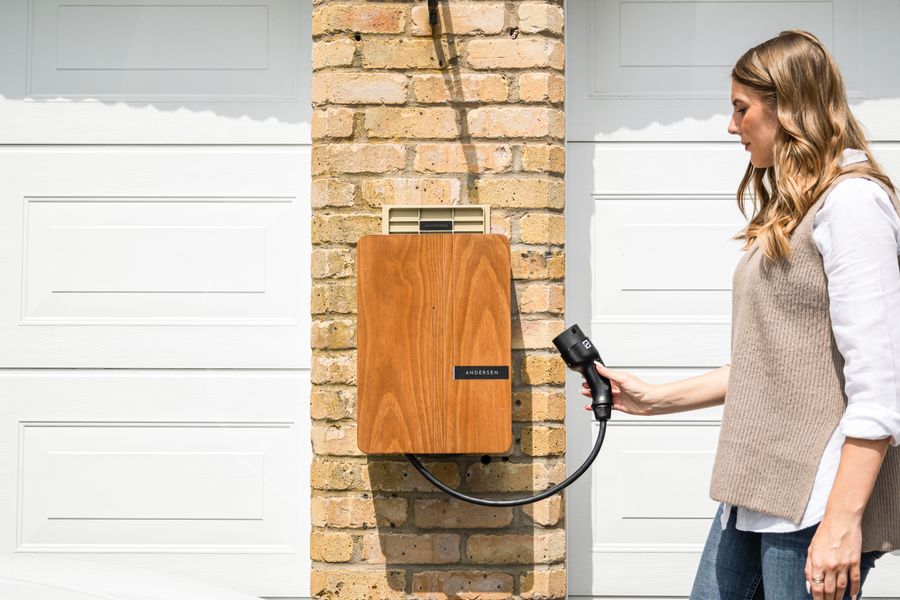 Start with miles. The average Texas driver covers around 1,200 miles a month; at 3–4 miles per kWh, that’s roughly 300–400 kWh of charging — a pool pump and a half of new demand. With Texas sun, a modern 400-watt panel yields about 50–60 kWh monthly, so most drivers need 6–10 panels dedicated to the car. Heavier commutes or a second EV scale accordingly.
This math slots directly into system sizing — our guide on how many solar panels a Texas home needs covers the household side of the equation, and the incremental cost of a few extra panels is small when they ride along with a full installation (see current Texas solar pricing).
Here’s the wrinkle: your panels produce at noon, but most cars charge overnight. Three strategies bridge the gap:
If your car is home during the day — remote work, second vehicle, weekend top-ups — schedule charging for late morning through afternoon. You’re pouring solar straight into the battery on wheels, at your cheapest possible rate.
Export your midday surplus for bill credits, then charge overnight against them. How well this works depends entirely on your plan’s export rate — on a strong plan it’s nearly seamless; on a weak one you’re selling low and buying high. Our comparison of Texas solar buyback plans shows what to look for.
Store the midday surplus, charge the car from it in the evening. A battery adds real cost — see our Texas battery storage price guide — but it also brings outage backup, and an EV household arguably values backup power more than anyone.
| Option | Charging Speed | Typical Installed Cost |
|---|---|---|
| Level 1 (wall outlet) | 3–5 miles of range/hour | $0 — uses existing outlet |
| Level 2 charger | 20–40 miles of range/hour | $800–$2,000 installed |
Level 2 is the practical choice for daily drivers, and incentives help: a federal credit covers 30% of charger installation (up to $1,000) for installations through June 2026, and many Texas utilities offer Level 2 rebates in the $250–$1,000 range. Installing the charger during your solar project saves an electrician trip — and if your panel needs a capacity upgrade, one permit covers both.
 Stack the three fuel options for a typical Texas driver:
Over 25 years, solar charging saves the average driver five figures versus grid power and multiples of that versus gas — and unlike gas prices, your cost per mile is fixed the day your panels are commissioned.
The cheapest time to add EV capacity is on day one — a slightly larger inverter, a few more panels, a 240V circuit roughed in. Retrofitting all three later costs more. Big Texan Solar designs EV-ready systems as standard practice, part of the long-view approach in our complete homeowner’s guide to home solar panels in Texas.
Contact us today and tell us what’s in your garage — or what will be.
Yes — when the car charges while your panels produce, it draws solar power through your home’s normal wiring. No special “solar charger” is required; timing is the whole trick.
For average driving (about 1,200 miles/month), plan on 6–10 additional panels. High-mileage drivers or dual-EV homes need proportionally more.
Home charging wins decisively — public fast charging often costs 3–5× home rates. Solar-powered home charging beats everything.
It won’t damage anything, but an EV can consume the surplus your system used to export, shrinking your buyback credits. That’s why declaring a planned EV during system design matters.
No — daytime charging or buyback credits work without one. A battery helps most when your car is only home at night and your buyback plan pays poorly.
A hardwired Level 2 charger typically requires an electrical permit and licensed installation, just like solar work. Bundling both projects under one visit is the efficient route.