

Call Us Now
Call Us Now

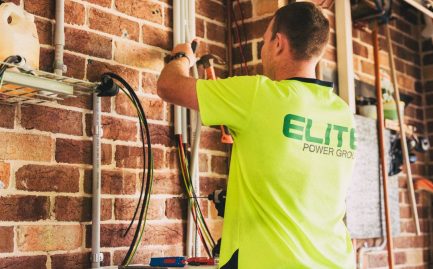
In 2026, solar battery storage in Texas typically costs $10,000 to $18,000 installed for a single home battery, or roughly $1,000 to $1,400 per kilowatt-hour of capacity. Whole-home backup setups with two or more batteries can run $25,000 to $35,000. While the federal residential tax credit for batteries ended after 2025, utility programs and virtual power plant credits can still cut thousands off the real cost.
Power outages, low solar buyback rates, and summer price spikes have made batteries the most asked-about upgrade for Texas solar homeowners. The question is almost always the same: what does one actually cost, and is it worth it without the tax credit?
This guide breaks down real installed prices in Texas in 2026, what pushes them up or down, and the programs that still help you pay for one. It builds on our complete homeowner’s guide to home solar panels in Texas.
Installed pricing depends mostly on usable capacity — how many kilowatt-hours the battery can actually deliver to your home. Here is what Texas homeowners are paying in 2026:
| Battery Size | Typical Installed Cost | What It Covers |
|---|---|---|
| 10 kWh | $10,000–$14,000 | Essentials: fridge, lights, internet, fans |
| 13–14 kWh | $12,000–$16,000 | Essentials plus a window AC unit or well pump |
| 20 kWh | $18,000–$25,000 | Most circuits, short central AC runtime |
| 27+ kWh (2+ units) | $25,000–$35,000 | Whole-home backup, including central AC |
These figures are for batteries added alongside a solar installation. Retrofitting a battery onto an existing solar system typically adds $1,000–$3,000 for electrical work and, in some homes, a panel upgrade. For context on the solar side of the equation, see our breakdown of how much solar panels cost in Texas in 2026.
Most 2026 home batteries use lithium iron phosphate (LFP) chemistry, which tolerates Texas heat better and lasts longer than older lithium NMC designs. Premium brands charge more but typically include stronger warranties and better outage-management software.
Capacity (kWh) determines how long you can run your home; power rating (kW) determines how much you can run at once. Central air conditioning is the big one — starting a 4-ton AC compressor requires either a high-power battery, a soft-start device, or a second unit.
A partial-home backup panel that protects essential circuits keeps costs down. Whole-home backup requires more capacity, and older homes may need a service panel upgrade running $1,500–$3,000.
Garage installs with short wire runs are cheapest. Exterior walls needing shade structures, long conduit runs, or detached buildings add labor.
The 30% federal residential tax credit that used to cover batteries expired on December 31, 2025 — homeowners who installed in 2025 were the last to claim it. But several savings paths remain:
Our roundup of solar incentives and tax credits available in Texas covers the current programs in detail.
Texas has no statewide net metering, and many retail buyback plans now credit exported solar at well below the retail rate. That changes the math: every kilowatt-hour you store and use yourself is worth the full retail price you avoided paying, while an exported one may earn only a few cents. If your buyback plan pays poorly, a battery converts your cheap exports into full-value savings — our guide to how net metering works in Texas explains how those credits are calculated.
Add outage protection and it’s a different conversation than it was a few years ago. Standard grid-tied solar shuts off when the grid goes down; a battery with islanding capability keeps your essential circuits running through summer storms and winter grid emergencies alike — our guide on whether solar powers your home during a Texas grid outage explains exactly how that works.
Most home batteries carry a 10-year warranty and keep working for 10–15 years, gradually losing usable capacity the way a phone battery does. Warranties typically guarantee around 70% of original capacity at the 10-year mark. Because a battery will likely be replaced once during a solar system’s 25–30-year life, we recommend budgeting for that in any long-term payback calculation.
Battery pricing swings widely with capacity, backup scope, and your electrical panel — the ranges above narrow to a firm number only after a site assessment. Big Texan Solar designs solar-plus-storage systems sized to your actual usage and outage priorities, and we’ll tell you honestly whether a battery pencils out for your home or whether a solar-only system serves you better.
Contact us today for a free consultation and a line-item storage quote.
A single Powerwall-class battery (13.5 kWh) typically runs $12,000–$16,000 installed in Texas in 2026, depending on backup scope and electrical work required.
Yes. AC-coupled batteries retrofit onto almost any existing solar installation. Expect modestly higher costs than installing solar and storage together.
Not for homeowner-purchased systems — the 30% federal residential credit expired December 31, 2025. Third-party-owned arrangements can still pass commercial-credit savings through to you.
A 13 kWh battery runs essential circuits for roughly 12–24 hours, longer if solar recharges it each day. Whole-home backup with central AC drains batteries much faster, which is why multi-battery setups are common for that goal.
The stronger your buyback rate, the weaker the pure-savings case for a battery — the grid is effectively storing your solar for you. Most homeowners with strong buyback plans buy batteries primarily for outage protection.
Yes. Lithium home batteries operate in freezing weather, and most are installed in garages where temperature swings are milder. Pairing a battery with solar keeps it recharging even during multi-day grid emergencies.